High-Efficiency Polyamide-Polyamine Epichlorohydrine (PAE) Wet Strength Resin LY-WA401
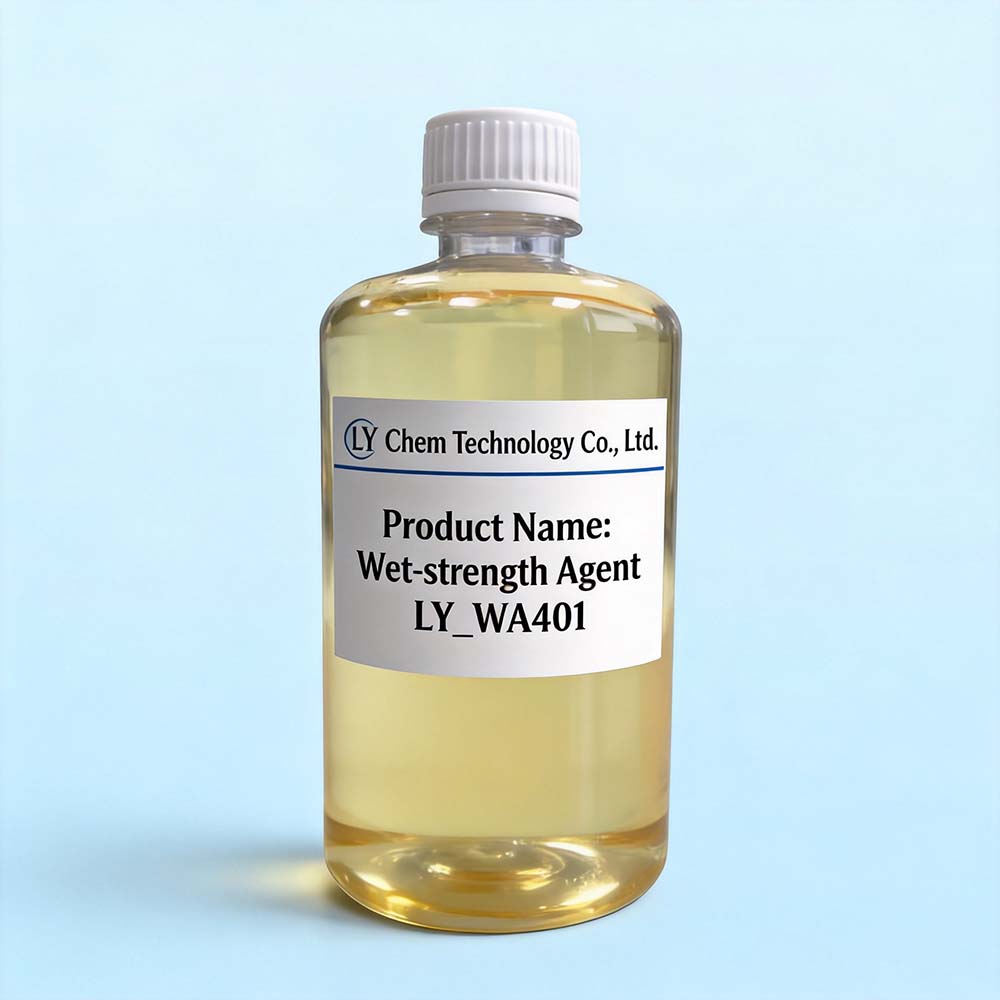
LY-WA401 is a premium water-soluble, cationic thermosetting resin formulated from Polyamide-Polyamine Epichlorohydrine (commonly designated as PAE or PPE resin). As one of the industry’s most widely trusted wet strength chemical additives, it demonstrates a highly optimized molecular architecture that delivers exceptional self-fixation across a vast pH spectrum.
Engineered specifically to survive demanding wet-end conditions, LY-WA401 retains its superior performance metrics even in pulp systems heavily contaminated with high concentrations of dissolved salt or interfering anionic trash/impurities. It provides modern paper mills with an advanced technical solution to maximize wet structural integrity while optimizing broke repulping efficiency.
Technical Specifications & Parameters
| Property / Indicator | Technical Standard |
| Appearance | Light yellow to light amber translucent liquid |
| Solid Content | 12.5% ± 0.5% |
| Viscosity (25°C) | ≤ 70 mPa·s |
| pH Value | 2.0 – 7.0 |
| Ionic Charge Type | Cationic |
| Solubility | Dissolves easily in cold water |
Core Technical Advantages & Value Proposition
1. Significant Boost to Wet Strength Ratios
Standard, untreated paper sheets typically lose almost all structural cohesion when saturated with water, retaining a mere 2% to 10% of their original dry tensile strength. The addition of LY-WA401 remedies this by establishing a cross-linked thermosetting network among cellulose fibers, successfully elevating the wet strength of the finished sheet to 20% to 40% of its initial dry strength.
2. High Fiber Performance Preservation Without Yellowing
Unlike obsolete aldehyde-based resins, LY-WA401 improves wet tensile strength without degrading the original softness, texture, or liquid absorbability of the paper matrix. Furthermore, it uses low dosage amounts, resists thermal degradation (heat resistance), and minimizes the “yellowing phenomenon” common in high-brightness white papers.
3. Highly Cost-Effective Broke Repulping & Recovery
A major disadvantage of traditional wet-strength resins is the extreme difficulty in recycling damaged or scrap paper rolls. LY-WA401 overcomes this operational hurdle. While it provides robust water resistance during end-use, the broke or waste paper remains highly responsive to industrial repulping processes, cutting down energy consumption in the hydration loop and preventing fiber waste.
4. Broad Sizing Synergy & Multi-Action Wet-End Benefits
LY-WA401 operates efficiently across acidic, neutral, and medium-alkaline papermaking conditions. It features a strong cationic charge that works well alongside rosin sizing agents and aluminum sulfate (alum). Beyond wet reinforcement, it acts as a secondary process aid, providing excellent retention and drainage-filtration benefits to improve overall paper machine line speed.
Application & Dosage Guidelines
To capture maximum retention and ensure absolute blending without polymer shearing, follow these procedures:
- Dilution: The concentrate should be pre-diluted with cold water down to a 5% solution prior to system injection.
- Addition Point: To guarantee complete, homogeneous distribution through the pulp stock while avoiding excessive mechanical shear forces, the chemical addition point must be located near the headbox.
- Chemical Compatibility: Because it is a highly active cationic resin, it must not be directly mixed or pre-blended with anionic substances or untreated anionic additives to prevent precipitation or gelling.
Main Product Applications
LY-WA401 features an extraordinarily wide application scope across modern paper manufacturing sectors, proving highly effective for:
- Sanitary & Toweling Papers: Household tissue paper, pocket tissues, and paper towels requiring instant liquid absorption combined with high wet durability.
- Specialty & Agricultural Barriers: Fruit-growing protection bags, agricultural wraps, and heavy-duty liquid packaging board (LPB).
Packaging, Storage & Handling
- Packaging Logistics: Shipped in heavy-duty 200 kg plastic drums or 1,000 kg IBC tote containers to seamlessly match automated chemical feeding and metering infrastructures.
- Storage Environment: Maintain pristine conditions inside a cool, dry, and properly ventilated facility at temperatures between 5°C and 30°C. Prevent any direct exposure to sunlight and avoid freezing conditions.
- Shelf Life: 3 months from the manufacturing date when stored in original, unopened packaging.
 English
  Arabic
  Portuguese
  Spanish
  Vietnamese
  Russian